01Guides · 9 min read
How long expressed milk keeps, and what an insulated bottle bag actually buys you
The four numbers a pumping parent ends up memorising, and the one that decides what an insulated bag is actually for.
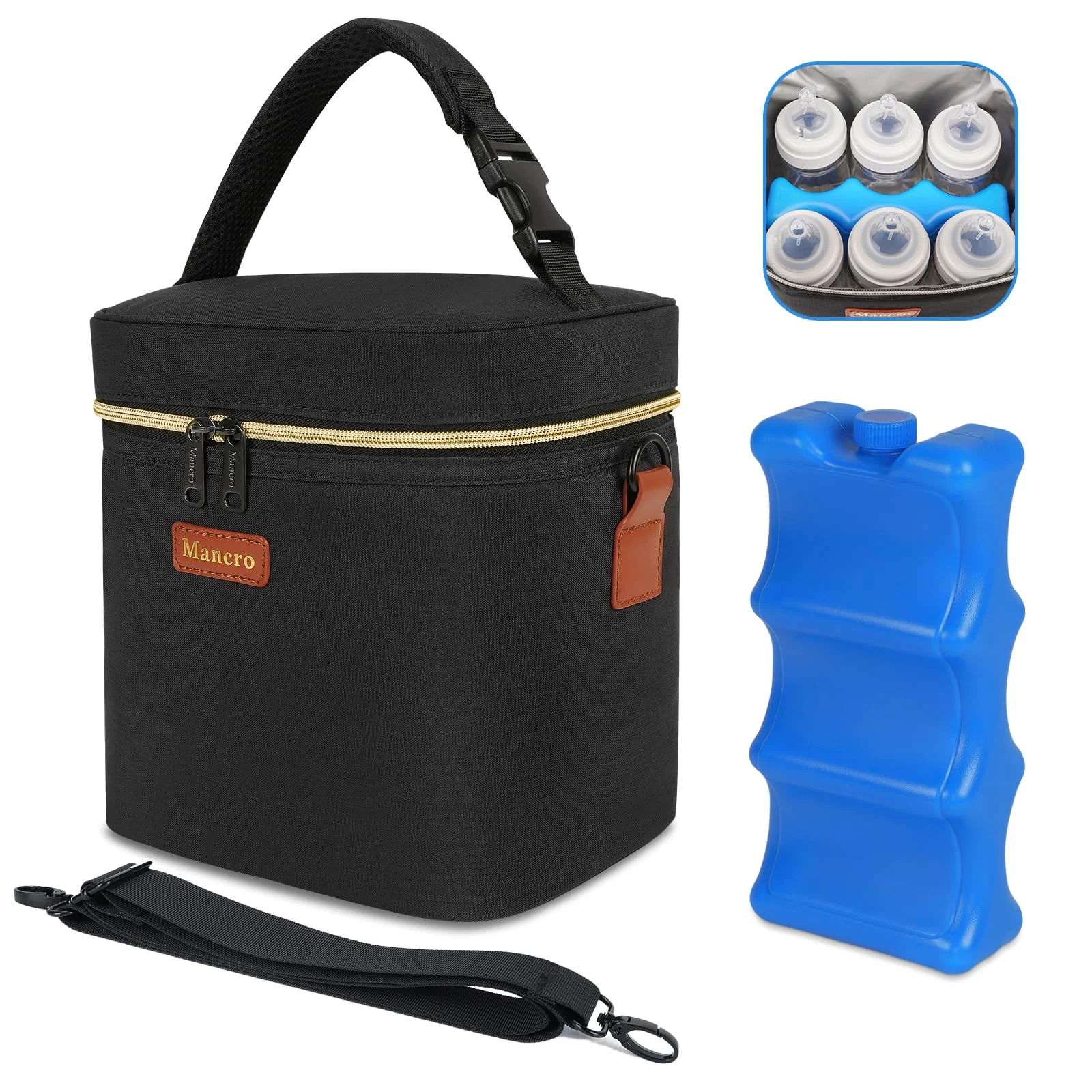
This is a bag, not a refrigerator, and nothing here is medical advice. The federal guidance is specific and worth reading in full: freshly expressed milk keeps about four hours at room temperature, four days in a refrigerator, and, the line that matters for a cooler bag, up to twenty-four hours in an insulated bag with frozen ice packs while you are traveling. Once it is cold it has to stay cold until it is used. Our insulated bags are built to hold that cold for a commute and a working day; how long they hold it depends on how many bottles are inside, how warm the day is, and how often the bag is opened. If a feed has been out longer than the guidance allows, the guidance wins, not the bag.
The four numbers worth memorising
Four storage numbers decide how a pumping day is planned. The federal guidance says freshly expressed milk keeps up to 4 hours at room temperature, which is defined as 77 F or colder. Once chilled, milk may be stored and carried in an insulated cooler bag with frozen ice packs for up to 24 hours while you are traveling. In a refrigerator the limit is 4 days. In a freezer it is about 6 months for best quality, and up to 12 months is still acceptable.
Four hours on a counter. Twenty-four in a cooler bag with frozen packs while you are moving. Four days in a fridge, six months in a freezer. The two temperatures behind those numbers matter as much as the hours do: a refrigerator at 40 F or below, a freezer at 0 F or below.
A couple of practical add-ons are worth noting. Freeze milk in 2 to 4 ounce portions and leave about an inch of headroom because milk expands as it freezes. If you pour out milk that was used during a feed, it can still be used within 2 hours after the baby finished. After that it is thrown away.
Keep those four numbers on a note in the pump bag. They are limits, not targets, and a workplace or a daycare may set stricter rules of its own.
What an insulated bag with frozen ice packs is rated for, and what happens after that
An insulated bag with a frozen pack moves cold milk. It does not make cold. The federal guidance allows expressed milk to be stored and transported in a cooler bag with frozen ice packs for up to 24 hours while traveling. That is the practical boundary we plan around.
Our bags are lined with foil-faced insulation that wipes clean with a cloth, and the flat contoured pack that ships with them sits between the bottles rather than on top of them. That is where it does the work: in contact with glass or plastic, not with air. If milk is cooled in the bag, it should stay cool until you use it. Milk transported this way can then be transferred to the refrigerator or freezer at your destination.
After 24 hours in a cooler bag the storage is outside the federal guidance. At that point the conservative choice is to refrigerate or freeze as soon as possible once a proper refrigerator or freezer is available. If neither is available, the milk should not be treated as meeting the recommended storage limits. The bag slows warming. It does not reset the clock on milk that was already at room temperature when you packed it.
When you pack for a day, think about sequencing. Chill the ice packs thoroughly before you leave. Arrange the bottles so the flat pack sits between them. Use the bag to bridge a single trip, then transfer the milk to the back of a refrigerator or freezer when you arrive.
Bottle counts: why six becomes four
The capacity numbers matter because they affect how you plan a pumping day. Our cooler bags hold four standard bottles up to nine ounces, or six. A wide-neck bottle takes the room of two. Those statements sound simple until you add ice packs and the realities of real bottles.
The ice pack needs room of its own. When you place the pack where it cools the bottles most effectively, it reduces the number of bottles you can fit comfortably and evenly. If you use wide-neck bottles they occupy more room, so a bag that might hold six narrow bottles becomes effectively a four-bottle bag. That is where six becomes four in practice.
Bottles also vary in height and cap profile. Longer bottles can crowd the lid and make the bag harder to close. The bag’s foil-faced insulation lining wipes clean with a cloth, but it does not change internal geometry. If you are planning to carry a full day’s supply, consider small bottles frozen in portions of 2 to 4 ounces. Those fit more predictably and freeze faster.
One bag in the range expands upward when a pumping day runs longer than planned. That extra height helps if you need to stack bottles or add a second frozen pack toward the end of the day. It is not an increase in thermal performance, but it gives you flexibility when volume is the constraint.
Plan by counting bottles, the size of the bottle neck, and the ice pack placement. That will help you decide whether to bring four larger bottles, or six smaller ones.
The drive, the shift, the fridge at the other end: a working day in order
Think about a typical day as a sequence of steps. Start with the pump, then cooling, then transport, then storage at the destination. Each step has a time and temperature rule you can use to keep milk within the public health limits.
Milk left standing has four hours in it, and not a minute more on a warm day. In practice, cool milk as soon as you can. Put it into the insulated bag with the frozen pack, positioning the flat pack between bottles to maximize contact. Once milk has been chilled in the bag, keep it cool until it is used. Twenty-four hours in an insulated bag with frozen packs covers a commute, a shift and the drive home with room to spare.
On arrival, transfer milk to the back of the refrigerator or freezer. Store milk in the back rather than the door because the door swings through temperature changes. Refrigerator storage runs to 4 days; a freezer keeps milk about 6 months at best quality and up to 12 months at a push. Label each container with date and time so whoever receives it knows the timeline.
If you are moving between two fridges during a workday, make the transfer as direct as possible and avoid leaving bottles in a warm car. Freezing in 2 to 4 ounce portions is practical for feeding and for quicker thawing during a shift. Leave roughly an inch of headroom in the container before freezing. If a feed leaves leftover milk, that milk can still be used within 2 hours after the baby finished. After 2 hours, discard it.
Follow the sequence and use the bag as a bridge. That keeps you inside the guidance and preserves the most milk for the day.
What goes wrong: warm cars, half-frozen packs, a bag opened every hour
There are predictable failure modes that turn a controlled plan into a scramble. The bag performs as designed when you start with fully frozen packs and avoid direct heat. Problems crop up when any of that changes.
A car parked in the sun warms quickly. Placing the bag in a hot vehicle reduces how long the ice pack can keep bottles cold. If you have to leave milk in a car, keep it out of direct sunlight and in the coolest part of the cabin. A half-frozen ice pack is another common issue. Packs must be frozen solid before you rely on them for a 24 hour transport window. If they are soft or partially thawed, they will not hold the same thermal load and the milk will warm sooner.
Opening the bag repeatedly also weakens the thermal barrier. Each opening lets warm air in and cold air out. If you need multiple feeds, try to plan bottle access so you open the bag as few times as possible. If you must reach in repeatedly, pack smaller portions that you can remove without disturbing the rest.
Close-fitting wide-neck bottles, larger caps, and loose packing create air gaps. Those gaps let warm pockets form inside the bag. Arrange bottles around the flat contoured ice pack so contact is even. Wiping the foil-faced lining with a cloth keeps the interior sanitary, but it does not improve insulation.
When one of these things happens, the safe route is to transfer the milk to a refrigerator or freezer sooner than planned. If that is not possible, treat the milk as outside the recommended storage parameters and work to the published limits rather than assuming the bag will make up the difference.
When the guidance and the bag disagree
The guidance gives clear time and temperature limits. A cooler bag helps you meet them while you are moving. It does not override them. If you find yourself in a situation where the bag seems to be underperforming, follow the public health limits.
If the bag is warm, the ice pack is not fully frozen, or the milk was already at room temperature when you packed it, you cannot extend the 4 hour, 24 hour, or 4 day boundaries with confidence. The guidance decides, not the bag. Where workplace or daycare policies are stricter, follow those local rules. They may require immediate refrigeration or specific labeling and handling beyond the federal thresholds.
Practical steps make this simple. Label each container with date and time. Freeze in 2 to 4 ounce portions with an inch of headroom to allow for expansion. Store transferred milk in the back of a refrigerator or freezer set at 40 F or below and 0 F or below respectively. If you need more capacity during a long day, use the expandable bag option so you can add a second frozen pack and stack bottles vertically.
Plan for the worst reasonable day rather than the best one. Freeze the pack solid the night before, pack the bottles around it, and open the bag as few times as the day allows. Use the bag to move milk and the published limits to decide what is safe. When in doubt, refrigerate or freeze sooner rather than later.
the Mancro bench is one click away when catalog turns out to be the wrong place to look.
One more thing
Every size, color and capacity in the Mancro range sits behind this button.